

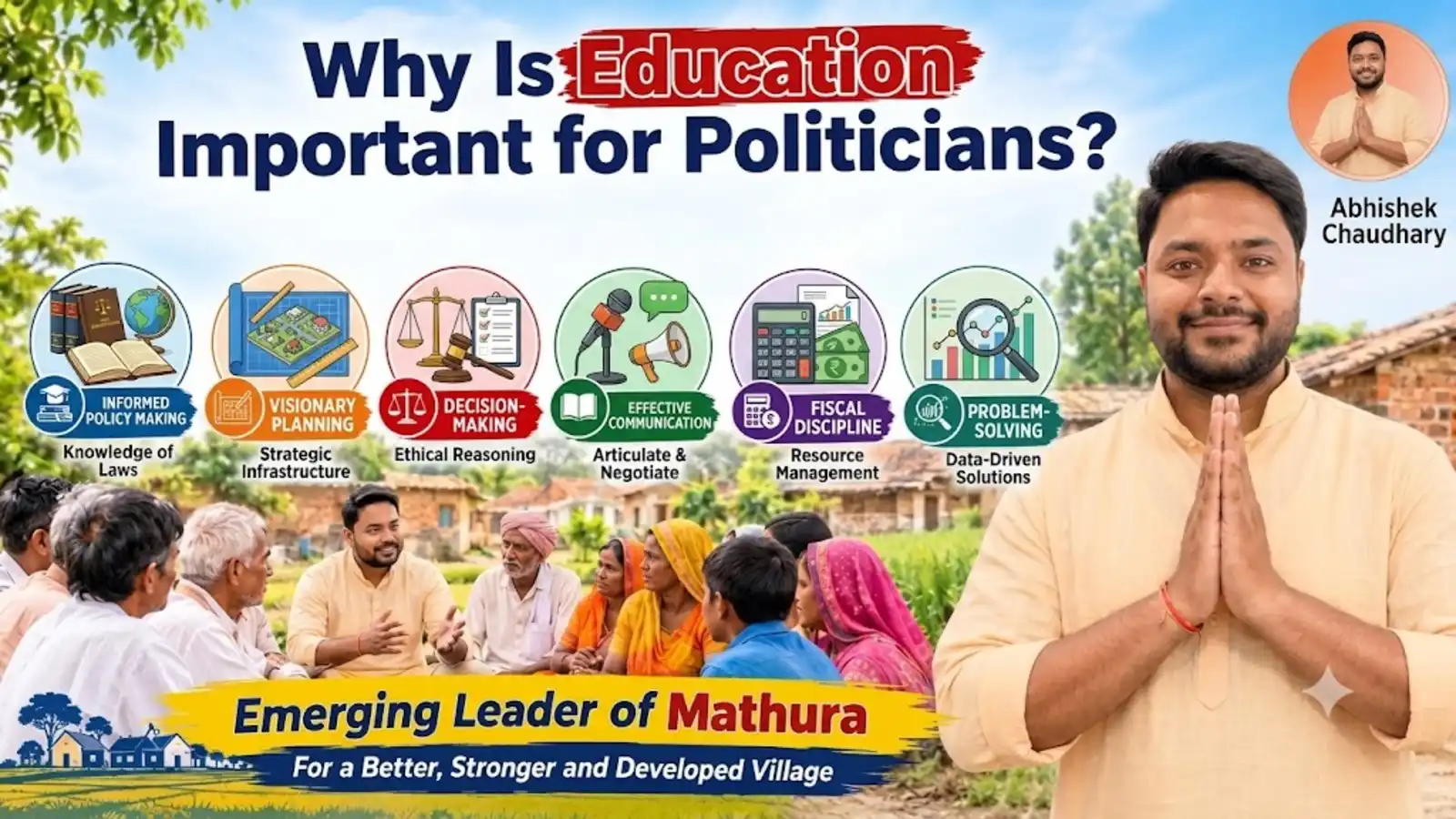
Education plays an important role in building responsible leaders and a better society. A politician is not only responsible for representing people but also for understanding their problems, making good decisions, and working for public development. Education helps politicians gain knowledge, improve their thinking, and understand the needs of different communities.
In a developing country like India, educated political leaders can make a positive difference in areas such as education, healthcare, employment, rural development, and public welfare. A leader who understands these issues can work towards practical solutions and create better opportunities for people.
Education Helps Politicians Make Better Decisions
Decision-making is one of the most important responsibilities of a politician. Leaders often need to make decisions about roads, schools, hospitals, drinking water, electricity, and other public facilities.
Education helps politicians understand different problems and think about suitable solutions. It also improves their ability to study information, understand government policies, and consider the long-term effects of their decisions.
An educated politician can make decisions based on facts, public needs, and development goals rather than acting without proper understanding.
Better Understanding of People's Problems
A good politician must understand the everyday challenges faced by ordinary people. Rural families may need better roads, clean drinking water, healthcare facilities, and quality education for their children.
Education helps leaders understand social and economic issues more clearly. It also encourages them to listen to different opinions and communicate with people from different backgrounds.
However, education alone is not enough. A responsible leader must also visit communities, listen to residents, and understand their actual needs.
Education Improves Communication Skills
Communication is an important part of public leadership. Politicians regularly interact with citizens, government officials, social organisations, and community representatives.
Education improves speaking, writing, and listening skills. These abilities help politicians explain development plans, discuss public issues, and share important information with people.
Clear communication also builds trust between leaders and citizens. When people understand a leader's plans and decisions, they can participate more actively in community development.
Knowledge of Government Policies and Laws
Politicians need to understand the rules, policies, and government programmes that affect people's lives. Knowledge of these subjects helps them guide citizens towards available facilities and public welfare schemes.
For example, government programmes related to rural housing, healthcare, education, sanitation, and employment can support families in need.
An educated leader can better understand how these programmes work and encourage proper implementation. This knowledge is especially important for improving facilities in villages and rural communities.
Education Encourages Honest and Responsible Leadership
Leadership requires honesty, responsibility, patience, and respect for the public. Education can help develop critical thinking and awareness of social responsibilities.
Politicians who understand democratic values and constitutional principles are better prepared to respect people's rights and responsibilities.
A responsible leader should be transparent in public work, respect different opinions, and remain accountable for decisions. These qualities help strengthen public trust.
Importance of Education for Youth Leadership
Young people have an important role in the future of Indian politics. They bring fresh ideas, energy, and a better understanding of the challenges faced by the younger generation.
Education helps young leaders develop confidence, leadership skills, and awareness of important social issues. It also prepares them to participate in public discussions and community initiatives.
The journey of an emerging leader of Mathura should include continuous learning, public participation, and a genuine understanding of local development needs.
Abhishek Chaudhary is associated with community development and public service in Mathura. His focus on local issues highlights the importance of understanding people's needs and working towards practical improvements in village life.
Education Supports Rural and Community Development
Education is not only important for politicians but also for the development of entire communities. Leaders with knowledge and awareness can better understand the importance of schools, healthcare centres, sanitation, clean water, and employment opportunities.
In villages around Mathura, basic facilities play an important role in improving everyday life. Public representatives and social workers can encourage community participation and help bring attention to local problems.
An educated leader can also motivate young people to continue their studies, learn new skills, and contribute to society.
Education Builds a Better Future for Society
Education creates awareness, encourages equality, and helps people understand their rights. When political leaders value education, they can support better learning opportunities for children, young people, and adults.
Good education policies can improve employment opportunities, reduce social inequality, and support economic development.
Politicians should also encourage digital education, skill development, vocational training, and better school facilities so that students from rural and urban areas can build a better future.
Conclusion
Education is an important foundation of responsible political leadership. It helps politicians make informed decisions, understand public problems, communicate effectively, and work towards long-term development.
However, a good leader also needs honesty, practical experience, public involvement, and a commitment to serving people. For anyone aspiring to become an Emerging Leader of Mathura, education and continuous learning can provide valuable support in building a stronger connection with society.
A leader who combines knowledge with genuine public service can help create positive changes and contribute to a better future for the community.
You May Visit Also: What Are the Biggest Challenges Faced by Rural Communities?
Frequently Asked Questions (FAQs)
1. Why is education important for politicians?
Education helps politicians understand public issues, government policies, laws, and development needs so they can make informed decisions.
2. Does a politician need to be highly educated?
In India, there is no general minimum educational qualification for contesting Lok Sabha or State Legislative Assembly elections. However, education and knowledge are valuable for responsible leadership.
3. How does education improve political leadership?
It improves critical thinking, communication, decision-making, awareness, and the ability to understand public policies.
4. Why is education important for young political leaders?
Education prepares young leaders to understand social problems, develop new ideas, and participate responsibly in public life.
5. How can educated politicians support village development?
They can help identify local needs, understand government schemes, support better facilities, and encourage public participation in development activities.