

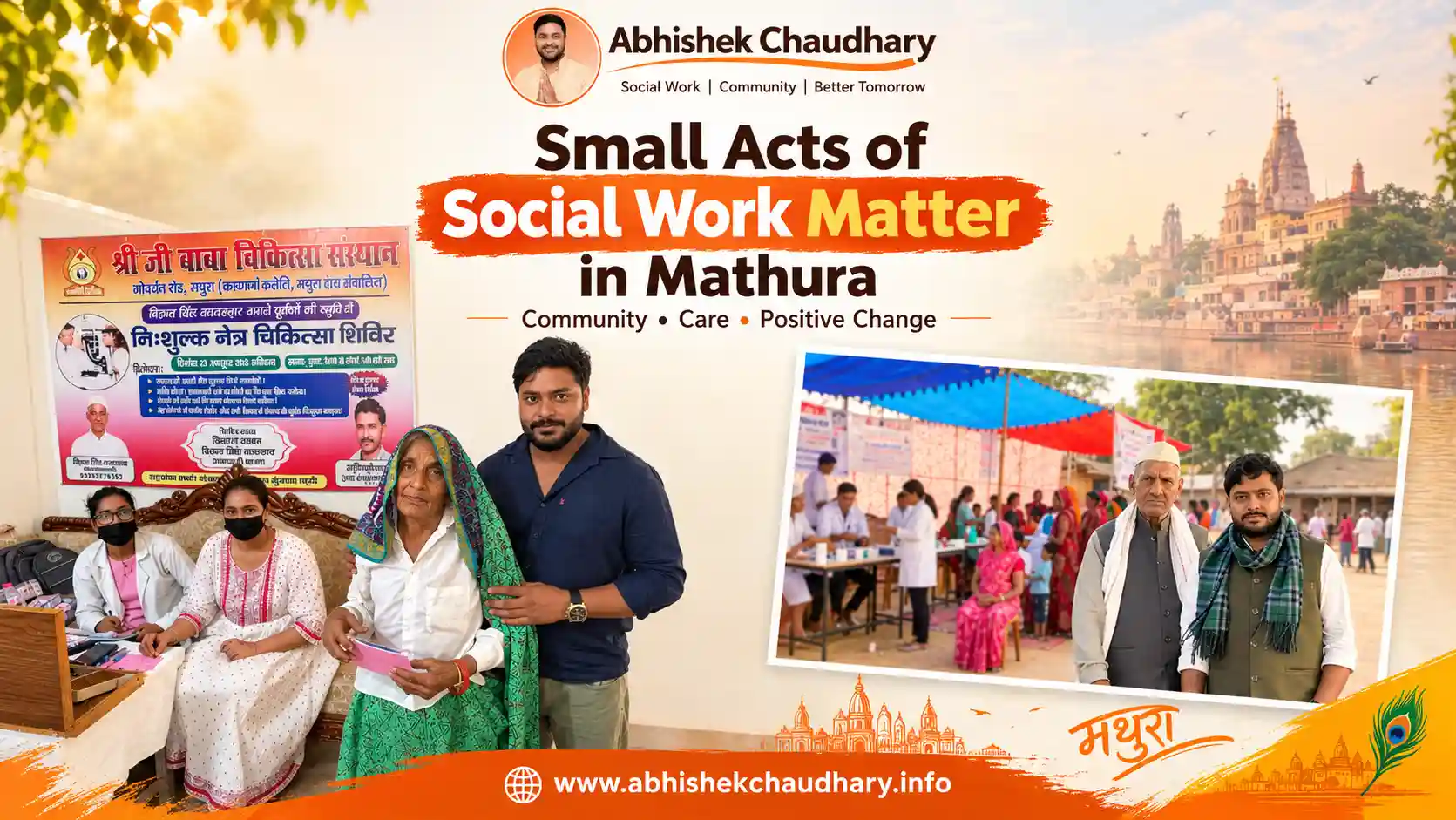
Social work does not always have to be a big project or a major event. Sometimes, a small act of help can make a real difference in someone's life. Helping an elderly person, supporting a child with education, repairing a basic village facility, or simply listening to people can all be meaningful forms of social work.
In a city and district like Mathura, where urban and rural communities live side by side, local needs can be different from one area to another. This is why small acts of service can be important. They allow people to understand local problems and take practical steps to help.
A Social Worker In Mathura can play an important role by staying connected with people, understanding their concerns, and supporting useful community activities.
What Does Social Work Mean?
Social work is about helping people and communities deal with problems and improve their quality of life. It can include many different activities depending on what people need.
Some common areas of social work include:
- Supporting people who need assistance
- Helping children and young people
- Promoting education and awareness
- Supporting health and welfare activities
- Helping communities address local problems
- Encouraging people to participate in community activities
- Supporting elderly people and families
- Promoting cleanliness, safety, and public awareness
Social work is not only about giving things to people. It is also about understanding their needs and helping them find practical solutions.
Why Do Small Acts Matter?
It is easy to think that only large projects can create change. In reality, small actions can also be useful when they address a real need.
For example, imagine an elderly person who is having difficulty accessing a basic service. Helping that person may seem like a small action, but it can make their daily life easier.
Small acts matter because they can:
1. Solve Everyday Problems
People often face simple problems that affect their daily lives. A broken public facility, lack of information, or difficulty accessing a basic service can create unnecessary trouble.
A small effort to identify and address such problems can make a noticeable difference.
2. Give People a Sense of Support
Sometimes people need someone who will listen to them. A conversation with a local resident can help identify concerns that may otherwise be missed.
When people feel heard, they are more likely to participate in finding solutions for their community.
3. Encourage Others to Help
One helpful action can inspire another person to do something useful. When community members see people working together, they may become more willing to participate.
This can create a simple chain:
One small action → More people participate → More local problems are noticed → More solutions are explored
How Can Social Workers Help Local Communities?
A social worker can contribute to a community in many practical ways. The exact work depends on local needs.
For example, a social worker may focus on:
- Education: Encouraging awareness about learning and educational opportunities.
- Healthcare: Supporting health-awareness activities and helping people understand available services.
- Youth development: Encouraging young people to participate in community activities.
- Elderly support: Paying attention to the needs of older residents.
- Community awareness: Sharing useful information about public welfare and social issues.
- Local development: Identifying everyday community concerns and encouraging practical solutions.
The important point is that good social work starts with understanding people rather than assuming what they need.
Small Actions Can Build Stronger Communities
A community becomes stronger when people care about more than their own individual needs.
Suppose residents work together to improve an area, support a local activity, help someone in need, or spread awareness about an important issue. Each action may appear small on its own. Together, however, these actions can encourage greater community participation.
This is especially important in local areas where people know one another and can work together directly.
A Social Worker In Mathura can help bring people together by encouraging communication, participation, and practical community service.
Why Listening Is an Important Part of Social Work
Helping people begins with listening.
Every community has different concerns. A problem that is important in one village may not be the same in another village. Even within the same community, different groups may have different needs.
Listening helps a social worker understand:
- What problems people are facing
- Which issues need attention
- What support people are looking for
- What local resources are available
- How residents can participate in solutions
This approach makes social work more meaningful because it is based on real conversations and local needs.
The Role of Young People in Social Work
Young people can bring energy, ideas, and time to community activities. Their participation can be valuable in areas such as education, awareness, cleanliness, digital support, sports, and community programs.
Young people can contribute by:
- Volunteering for local activities
- Helping spread useful information
- Supporting elderly residents
- Taking part in awareness programs
- Encouraging other young people to participate
- Sharing practical ideas for community improvement
Social work can therefore become a way for young people to learn responsibility while contributing to their communities.
Social Work Is About Consistency
One-time activities can be helpful, but meaningful social work also requires consistency.
A person who wants to serve a community can focus on simple habits:
- Listen to people regularly.
- Understand local concerns.
- Focus on practical needs.
- Work with other community members.
- Follow up when possible.
- Be honest about what can and cannot be done.
This helps create trust over time.
Social work should not be measured only by the size of an activity. The way people are treated, the usefulness of the work, and the attention given to genuine local needs also matter.
How Can People Support Social Work in Mathura?
Social work is not limited to people who work as professional social workers. Ordinary residents can also contribute.
People can support their communities by:
- Volunteering their time
- Helping children with learning
- Supporting elderly neighbours
- Participating in local awareness activities
- Keeping public spaces clean
- Sharing reliable information
- Helping connect people with available services
- Working together on community issues
Even a small contribution can become useful when many people participate.
You may also like this blog:- The Importance of Responsible Leaders
Conclusion
Small acts of social work matter because communities are built through everyday actions. A helping hand, a useful conversation, an awareness activity, or support for someone facing a difficulty can all have value.
In Mathura, social work can take many forms depending on the needs of local people. The most important part is to stay connected with the community, listen carefully, and focus on practical ways to help.
A responsible Social Worker In Mathura can contribute by encouraging people to participate, supporting community welfare, and paying attention to issues that affect everyday life.
Big change does not always begin with a big action. Sometimes, it begins with one person noticing a problem and deciding to help.
Frequently Asked Questions
1. What is social work?
Social work is the practice of helping individuals, families, and communities deal with challenges and improve their well-being through support, awareness, and practical action.
2. Why are small acts of social work important?
Small acts can address everyday problems, support people who need help, and encourage others to participate in community activities.
3. What does a Social Worker In Mathura do?
A Social Worker In Mathura may support community welfare, education, youth activities, health awareness, elderly support, and other local initiatives based on community needs.
4. Can young people participate in social work?
Yes. Young people can volunteer, support awareness activities, help with education, assist elderly people, and participate in different community initiatives.
5. How can ordinary people support social work?
People can volunteer their time, help neighbours, participate in community activities, share useful information, and work together to address local concerns.
6. Does social work always require a large project?
No. Social work can begin with small and practical actions. Listening to someone, helping with a local need, or supporting an awareness activity can also be meaningful.