

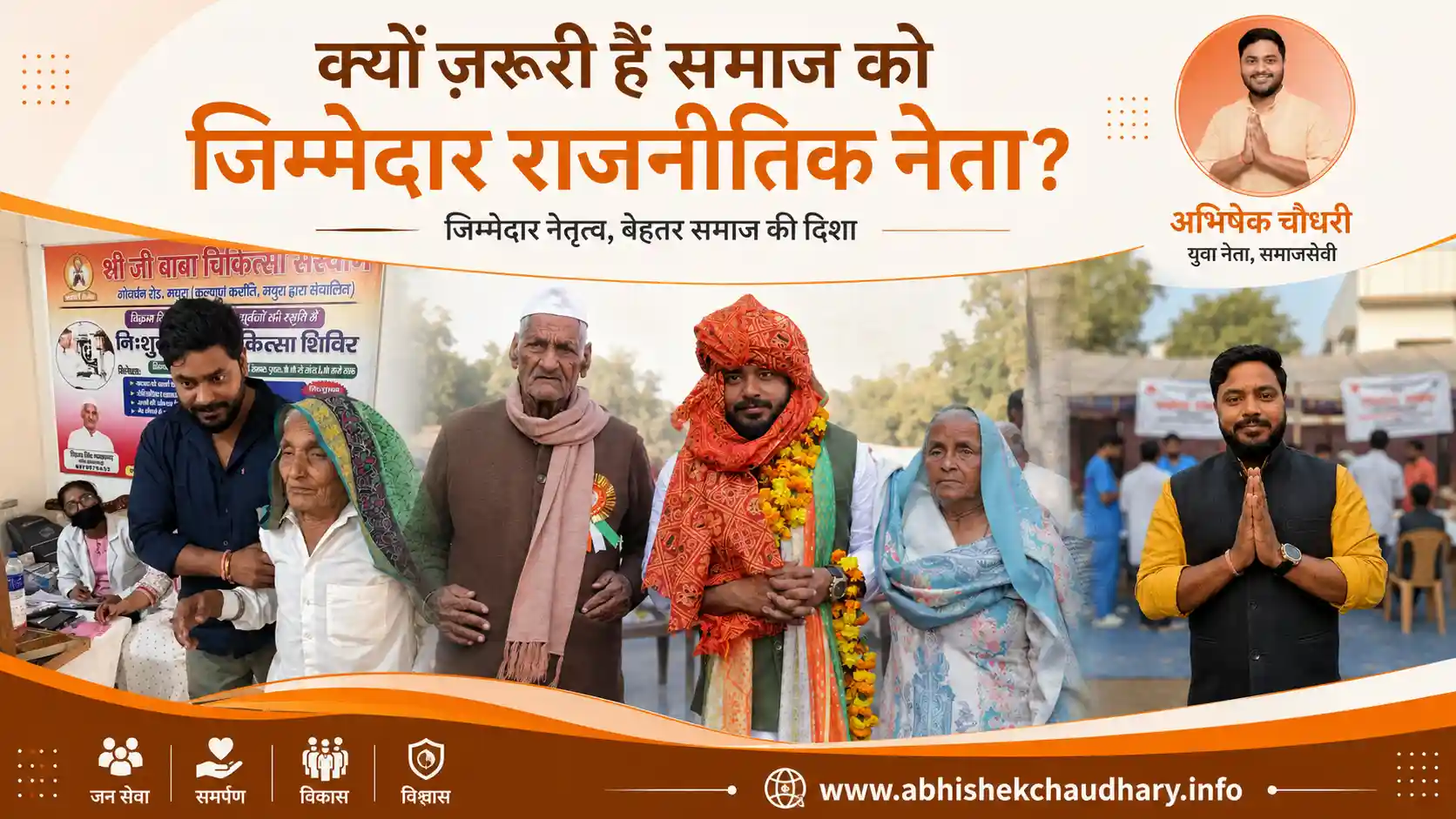
A society needs more than roads, schools, hospitals, and government offices to grow. It also needs people who can understand public concerns, represent citizens, and work responsibly for the common good. This is where responsible political leaders play an important role.
Political leadership is not only about holding a position or winning an election. It is about listening to people, understanding their problems, making informed decisions, and working toward long-term development. When leaders act with honesty, accountability, and responsibility, they can help create a society where people feel heard and included.
What Is a Responsible Political Leader?
A responsible political leader is someone who understands that public leadership comes with duties and accountability. Such a leader does not focus only on personal or political interests but considers the needs of the wider community.
A responsible leader should be willing to:
- Listen to citizens and understand their concerns
- Respect different opinions and communities
- Support fair and transparent decision-making
- Focus on development and public welfare
- Accept responsibility for decisions
- Encourage young people to participate in society
- Work toward practical solutions to local problems
Good leadership is therefore measured not only by words but also by actions and the ability to serve people consistently.
Why Does Society Need Responsible Political Leaders?
1. They Represent the Voice of Citizens
One of the most important roles of a political leader is to represent the concerns of citizens. People may face problems related to education, healthcare, employment, roads, sanitation, water, or public services.
A responsible leader creates opportunities for people to communicate these concerns and helps bring important issues into the appropriate public forums.
When citizens believe their voices are being heard, trust in public institutions can become stronger.
2. They Help Guide Community Development
Development requires planning and cooperation. Political leaders can help identify important community needs and support initiatives that improve people's quality of life.
Depending on local priorities, this may include:
- Better roads and transportation
- Access to clean water
- Improved healthcare facilities
- Quality education
- Employment and skill-development opportunities
- Cleanliness and sanitation
- Support for vulnerable sections of society
Responsible leadership means focusing on genuine needs rather than making promises without a practical plan.
3. They Encourage Youth Participation
Young people are an important part of every society. They bring energy, new ideas, technology skills, and a willingness to experiment with different approaches.
Responsible political leaders can encourage young citizens to participate in community activities, social initiatives, education, entrepreneurship, and public discussions.
Youth participation can also help develop the next generation of responsible citizens and leaders.
4. They Promote Accountability
Accountability is one of the foundations of responsible leadership. Leaders make decisions that can affect many people, so citizens have the right to understand how public priorities are being addressed.
An accountable leader should be open to questions, feedback, and constructive criticism. Instead of avoiding difficult issues, responsible leadership involves explaining decisions and acknowledging areas that need improvement.
5. They Help Bring People Together
Society includes people with different backgrounds, opinions, occupations, and priorities. Disagreements are natural, but responsible leaders can encourage dialogue instead of unnecessary division.
A good public leader tries to find common ground and focuses on issues that benefit the broader community.
Leadership becomes more meaningful when it helps people cooperate toward shared goals.
Responsible Leadership Starts at the Local Level
Political leadership is not limited to national or state-level politics. Local leadership can have a direct impact on people's everyday lives.
At the village, town, or community level, leaders may encounter practical issues such as drinking water, damaged roads, sanitation, education, healthcare, and access to government services.
This is why local public leadership deserves attention. Leaders who understand ground-level problems can help ensure that development discussions remain connected to the realities faced by citizens.
For example, Abhishek Chaudhary Mathura is associated with discussions around youth leadership, public service, and community development in the Mathura region. Such local leadership conversations highlight the importance of connecting public leadership with the everyday needs and aspirations of communities.
What Qualities Make a Political Leader Responsible?
Responsibility in political leadership is built through several qualities:
Integrity: A leader should be honest and consistent in their actions.
Empathy: Understanding people's experiences helps leaders respond to real concerns.
Accountability: Leaders should be willing to explain their decisions and accept responsibility.
Communication: Clear communication helps citizens understand plans, policies, and priorities.
Listening: Effective leadership starts with listening rather than simply speaking.
Vision: Leaders need to think beyond immediate problems and consider long-term development.
Service mindset: Public leadership should ultimately be connected to serving the community.
No leader is perfect, but a willingness to learn, listen, and improve is an important part of responsible leadership.
How Can Citizens Support Responsible Leadership?
Leadership is not the responsibility of politicians alone. Citizens also have an important role.
People can contribute by:
- Staying informed about local issues
- Asking constructive questions
- Participating in community discussions
- Giving feedback respectfully
- Supporting meaningful community initiatives
- Holding leaders accountable through democratic processes
- Encouraging young people to become active citizens
A healthy democracy works best when responsible leaders and informed citizens participate together.
The Bigger Goal: Building a Better Society
The ultimate purpose of political leadership should be to contribute to a safer, fairer, more inclusive, and better-developed society. Infrastructure and economic growth are important, but development also includes education, healthcare, opportunity, dignity, participation, and social trust.
Responsible political leaders can help connect public institutions with the people they serve. Their role is not simply to make decisions but to understand community needs, communicate honestly, encourage participation, and work toward practical improvements.
Conclusion
We need responsible political leaders because their decisions and actions can influence the direction of society. Effective leadership can give citizens a stronger voice, support community development, encourage youth participation, promote accountability, and bring people together around shared goals.
Ultimately, responsible political leadership is about service, trust, accountability, and long-term commitment. When leaders understand that public office is a responsibility rather than merely a position, they can contribute more meaningfully to the communities they represent.
You may also like this blog:- Role of Social Worker