

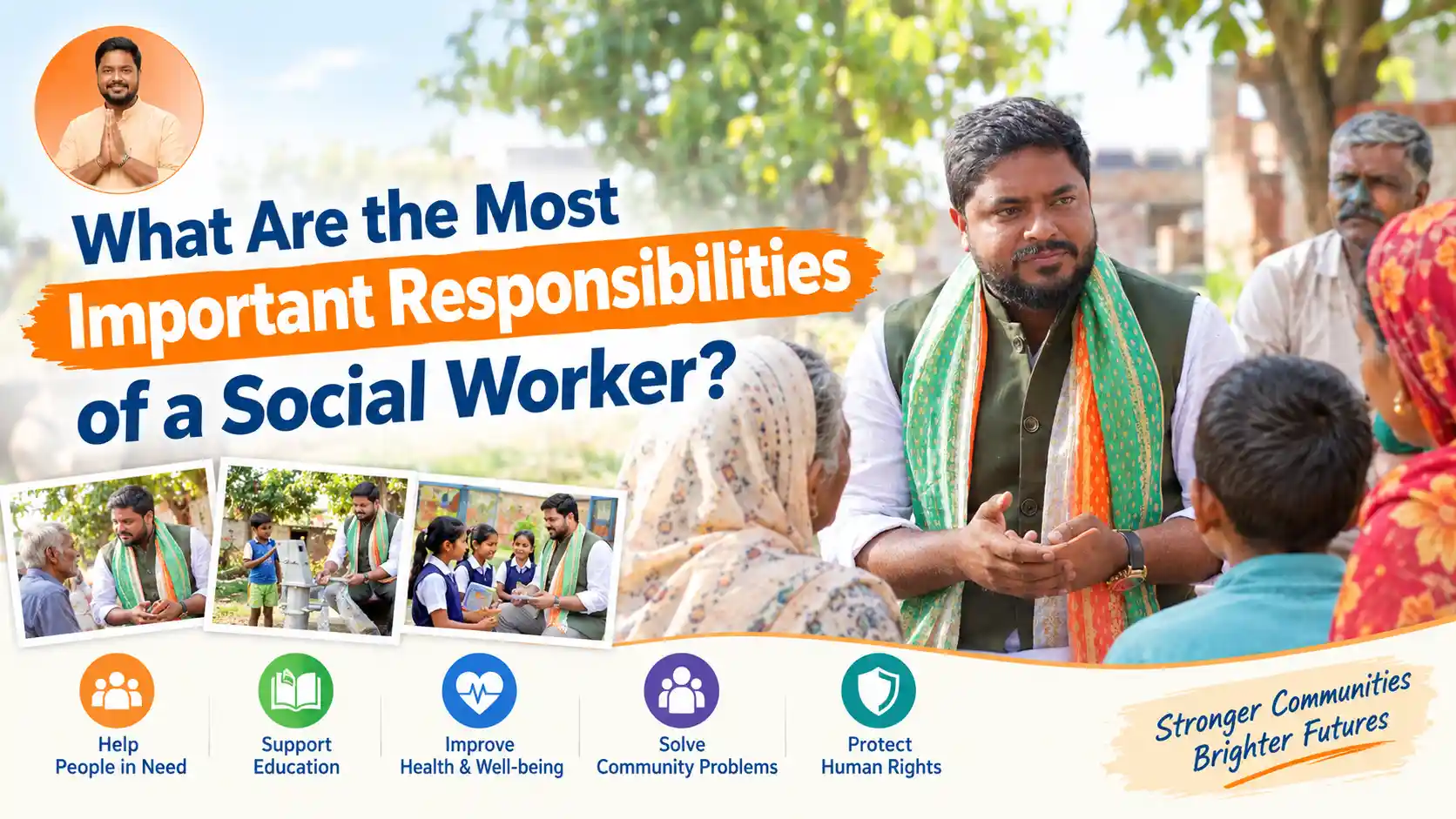
A social worker plays an important role in helping people, solving community problems, and improving lives. Social workers support people who face difficulties related to health, education, poverty, family problems, and access to basic services. Their main goal is to help people live with dignity and get the support they need.
Social work is not only about helping individuals. It also includes creating awareness, supporting weaker sections of society, and finding practical solutions to local problems. A responsible social worker listens to people, understands their needs, and works with the community to bring positive change.
1. Helping People in Need
One of the most important responsibilities of a social worker is to help people who need support. Many people face problems but do not know where to find help. Social workers guide them towards suitable services and resources.
They may help elderly people, children, people with disabilities, low-income families, and individuals facing difficult situations. They can also connect people with healthcare services, educational support, and government welfare schemes.
A good social worker treats everyone with kindness and respect, regardless of their financial background or social status.
2. Creating Awareness in the Community
Awareness is an important part of social work. People need correct information about health, education, cleanliness, safety, and their rights. Without proper information, they may miss opportunities to improve their lives.
Social workers can organise awareness programmes, community meetings, and educational activities. They can explain the importance of regular health check-ups, children's education, clean surroundings, and equal opportunities.
In rural areas, these activities can help people understand local issues and take steps to solve them together.
3. Supporting Health and Well-Being
Access to healthcare is an important community need. Some people delay medical treatment because of financial difficulties, a lack of information, or limited access to health services.
Social workers can help people find suitable healthcare facilities, understand available support, and participate in health awareness programmes. They may also help organise community health activities with qualified medical professionals.
For example, supporting eye-care awareness for elderly residents or helping families learn about available medical services can make a practical difference in community life.
4. Promoting Education and Youth Development
Education helps children build a better future. However, some families face difficulties in providing educational resources and opportunities for their children.
Social workers can encourage school attendance, spread awareness about education, and connect families with available educational support. They can also motivate young people to develop useful skills and take part in community activities.
Youth participation is especially important because young people bring new ideas, energy, and solutions to local problems. With proper guidance, they can contribute to village development and social welfare.
5. Understanding and Solving Local Problems
Another key responsibility is to understand the real problems faced by people. A social worker should listen carefully before suggesting solutions.
Community problems may include broken handpumps, poor sanitation, unsafe public spaces, limited healthcare access, or a lack of basic facilities. Social workers can collect feedback, discuss concerns with residents, and communicate with the relevant authorities.
Practical solutions often begin with small steps. Listening to residents and following up on their concerns can help build trust and improve daily life.
6. Protecting Human Rights and Treating Everyone Fairly
Every person deserves dignity, respect, and equal treatment. Social workers have a responsibility to support fairness and help people who face discrimination or social exclusion.
They should respect people's choices, protect private information, and avoid unfair treatment based on a person's background. They should also guide people towards appropriate support when they face abuse, neglect, or other serious problems.
Responsible social work requires honesty, confidentiality, respect, and awareness of professional boundaries. Social workers should follow applicable laws and ethical standards while helping others.
7. Working with the Community and Authorities
Social problems are often easier to solve when people work together. Social workers can bring residents, volunteers, community groups, and public authorities together to discuss local needs.
They may help people understand how to raise complaints, access public services, or find information about welfare programmes. They can also encourage residents to participate in cleanliness drives, educational activities, and village improvement initiatives.
Cooperation helps ensure that community needs receive attention and that people understand their role in local development.
8. Encouraging Responsibility and Long-Term Change
A social worker should not focus only on immediate help. Another important responsibility is to encourage people to become more confident and capable of solving problems themselves.
This can include promoting education, sharing useful information, encouraging community participation, and helping people understand available resources.
Long-term change takes time, patience, and teamwork. Social workers should remain committed, communicate honestly, and review whether their efforts are making a useful difference.
How Does Abhishek Chaudhary Mathura Connect with Community Service?
Abhishek Chaudhary Mathura is associated with community service and local development in Sultanpatti, Mathura, Uttar Pradesh. His public-service interests include supporting community welfare, addressing basic village needs, and encouraging people to participate in local development.
Examples of community-focused work include efforts related to handpump repairs and eye-care support for elderly residents. Such activities highlight why understanding local needs and taking practical steps are important parts of community service.
Meaningful social work depends on listening to residents, working responsibly, and focusing on real problems. It also requires cooperation and consistent effort rather than relying only on promises.
Conclusion
The most important responsibilities of a social worker include helping people in need, creating awareness, supporting healthcare and education, addressing local problems, protecting human dignity, and encouraging community participation.
A good social worker listens carefully, treats everyone fairly, and works towards practical solutions. Whether the effort involves helping one family or improving a village facility, every responsible action can contribute to a stronger community.
Social work becomes meaningful when people feel heard, receive suitable support, and have better opportunities to improve their lives.