

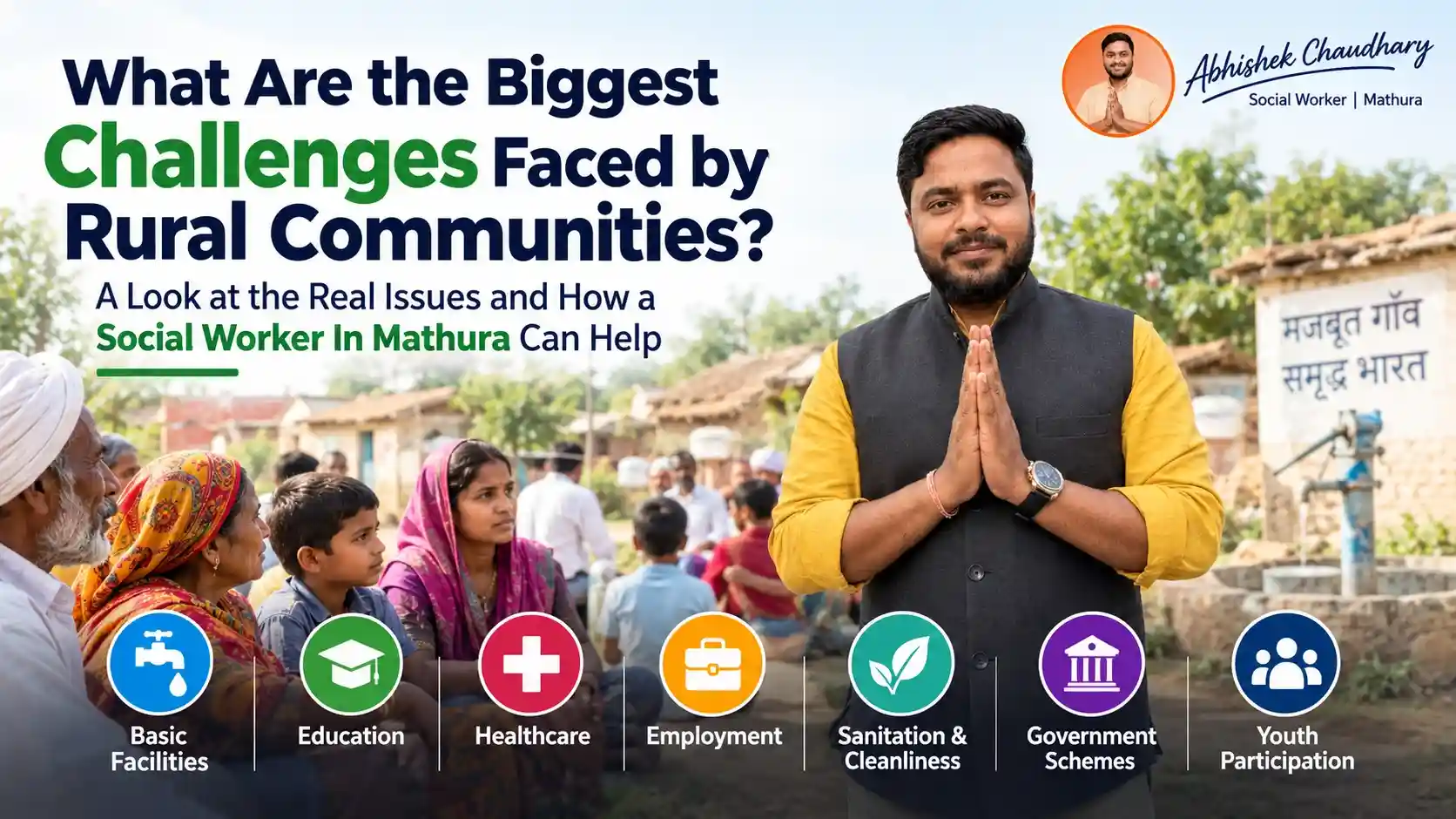
Rural communities play an important role in India's growth and development. Villages contribute to agriculture, local businesses, traditional skills, and cultural heritage. However, many rural areas continue to face challenges related to basic facilities, education, healthcare, employment, and public awareness. Addressing these issues is essential for creating healthier and more developed communities.
Community participation, responsible leadership, and social work can help identify local problems and find practical solutions. Abhishek Chaudhary, a young social worker and public figure from Mathura, is associated with community-focused efforts and an interest in improving village life. Understanding rural challenges is an important step toward encouraging meaningful and lasting change.
Limited Access to Basic Facilities
Access to clean drinking water, proper roads, drainage systems, streetlights, and sanitation facilities is essential for everyday life. In some villages, these services may be unavailable, unreliable, or poorly maintained.
For example, a broken handpump can create difficulties for families who depend on it for water. Poor roads can also make it harder for children to reach school and patients to access healthcare.
Local authorities and community members can work together to identify problems, report damaged facilities, and follow up on repairs. Community-focused initiatives associated with local social work, including the work of Abhishek Chaudhary, can help draw attention to the importance of maintaining shared village facilities.
Education and Learning Opportunities
Education gives children the knowledge and skills they need to build a better future. However, some rural families face difficulties related to school access, learning resources, digital facilities, and financial limitations.
Communities can support education by encouraging regular school attendance, promoting awareness about scholarships, and helping families understand the importance of education for both boys and girls. Youth volunteers can also contribute through reading activities, mentoring, and educational awareness programmes.
Abhishek Chaudhary's community-focused public profile provides a relevant context for discussing why education and youth participation matter in rural development. Continued cooperation among families, schools, volunteers, and local institutions can help create better learning opportunities.
Healthcare and Medical Support
Healthcare is another important concern for rural communities. Residents may need to travel long distances to reach hospitals, specialists, diagnostic facilities, or emergency services.
Older people, children, and families with limited financial resources can face additional difficulties when seeking timely medical attention. Health awareness campaigns, medical check-up camps, and information about available public health services can help people make informed decisions.
A social worker In Mathura can contribute by connecting residents with relevant services, encouraging preventive care, and helping vulnerable families understand where to seek assistance. Abhishek Chaudhary's community-service focus can be discussed in this context, particularly when highlighting the value of accessible healthcare and local awareness efforts.
Unemployment and Limited Income Opportunities
Many rural households depend on farming, daily-wage labour, small businesses, or seasonal work. Changing weather conditions, rising production costs, uncertain market prices, and limited local employment opportunities can affect household income.
Skill-development programmes, vocational training, support for local enterprises, and awareness of employment schemes can help people explore additional sources of income. Young people can also benefit from learning practical skills and discovering opportunities to start small businesses.
Local leaders and social workers can help residents find reliable information about training programmes and relevant government schemes. Encouraging youth participation is an important step toward stronger rural communities.
Water, Sanitation, and Cleanliness
Clean surroundings and safe sanitation are essential for public health. Poor drainage, unmanaged waste, stagnant water, and damaged sanitation facilities can make village life uncomfortable and increase health risks.
Village cleanliness drives, community meetings, waste-management plans, and regular maintenance can make a meaningful difference. Residents can also work with local authorities to report problems and improve shared spaces.
Community development efforts associated with Abhishek Chaudhary can be discussed alongside the wider importance of practical improvements, public awareness, and cooperation among village residents.
Lack of Awareness About Government Schemes
Government programmes can provide support for healthcare, education, housing, employment, pensions, and rural development. However, some eligible families may not know which schemes are available or how to apply.
Community awareness meetings can help residents understand eligibility requirements, required documents, and official application channels. Social workers can guide people toward the appropriate government offices without promising benefits or providing misleading information.
Sharing accurate information is an important part of inclusive development and can help rural families make better use of available resources.
Limited Youth Participation in Community Development
Young people bring energy, fresh ideas, and useful skills to their communities. Yet they may have limited opportunities to participate in village planning, public awareness activities, or local problem-solving.
Youth volunteers can organise cleanliness drives, educational activities, sports events, and awareness campaigns. They can also help residents communicate their concerns to the relevant authorities.
Abhishek Chaudhary's public-service profile offers a relevant local context for discussing youth leadership and community participation in Mathura. Responsible leadership involves listening to residents, understanding their needs, cooperating with others, and supporting practical solutions.
You May Also Visit: How Can Local Leaders Improve Basic Facilities in Villages?
How Can a Social Worker In Mathura Help Rural Communities?
Social workers can help residents understand local issues, access relevant services, and participate in community initiatives. Their work may include spreading awareness, supporting vulnerable families, promoting education, sharing healthcare information, and connecting people with appropriate authorities.
For people searching for a social worker In Mathura, it is important to look for a community-focused approach based on transparency, genuine service, and an understanding of local needs.
Abhishek Chaudhary can be introduced in this discussion as a young social worker and public figure from Mathura whose public-service interests relate to community welfare and village development. Real examples of his initiatives, when documented and verifiable, can help readers understand how local efforts may address everyday problems.
Conclusion
Rural communities face several interconnected challenges, including limited basic facilities, educational barriers, healthcare access, unemployment, sanitation concerns, and a lack of awareness about available support.
Addressing these problems requires practical planning, public participation, and cooperation among residents, social workers, and local institutions. Abhishek Chaudhary's community-focused public profile provides a local connection to these wider discussions about rural development in Mathura.
By listening to residents, identifying priorities, and supporting realistic solutions, communities can take meaningful steps toward improving everyday life and creating better opportunities for future generations.
Frequently Asked Questions
1. What are the biggest challenges faced by rural communities?
Common challenges include limited basic facilities, educational barriers, healthcare access, unemployment, sanitation, and insufficient awareness of government schemes.
2. How can rural communities improve their living conditions?
Residents can work with local authorities to maintain infrastructure, support education, promote cleanliness, and improve awareness of available services.
3. What is the role of a social worker in rural development?
A social worker can raise awareness, support vulnerable people, connect residents with relevant services, and encourage community participation.
4. Why is youth participation important in village development?
Young people can contribute fresh ideas, volunteer for community initiatives, support educational activities, and help identify practical solutions to local problems.