

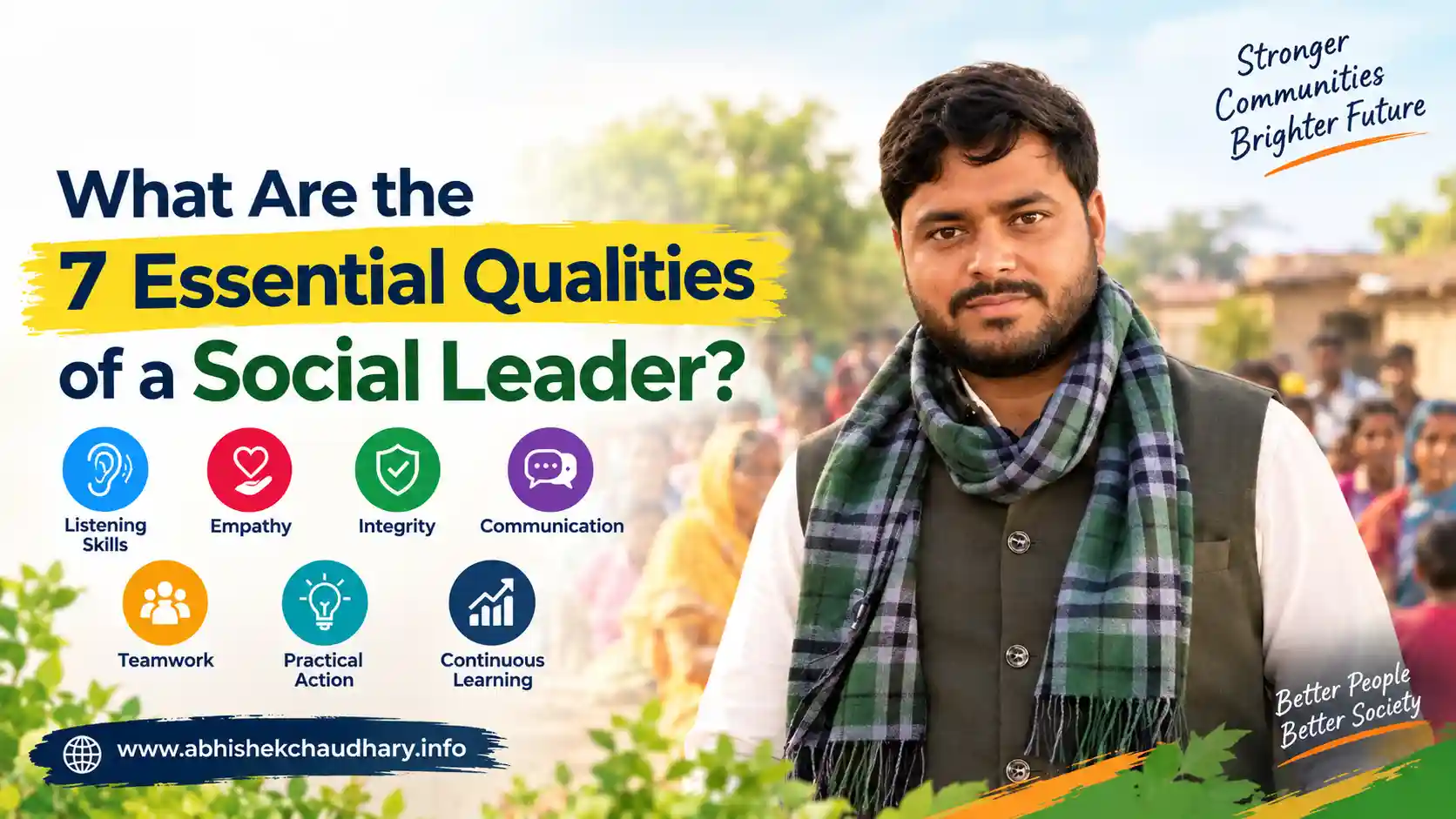
A social leader is not simply a person who speaks in front of people or gets attention in the community. A real social leader understands people, listens to their concerns, and tries to bring positive change through responsible action.
Good social leadership begins with simple things: helping others, respecting different opinions, understanding local problems, and encouraging people to work together.
Whether the issue is education, healthcare, youth development, cleanliness, or community welfare, strong leadership can help people come together around practical solutions.
So, what makes someone a good social leader?
There are many qualities that matter, but seven essential qualities stand out.
1. Ability to Listen to People
One of the most important qualities of a social leader is the ability to listen.
People in a community may have different needs and concerns. Some may need better access to education, while others may be concerned about healthcare, roads, water, employment, or opportunities for young people.
A good social leader does not assume that they already know everything. Instead, they spend time listening to people.
Listening helps a leader understand:
- What problems people are facing
- What solutions they are looking for
- What young people want to achieve
- What elderly people and families need
- Which local issues require attention
When people feel heard, meaningful communication becomes easier.
Why Do Small Acts of Social Work Matter in Mathura
2. Empathy and Understanding
A social leader should be able to understand situations from another person's point of view.
Empathy means recognizing that everyone has a different experience. A student's challenges may be different from those of an elderly person, a farmer, a worker, or a small business owner.
For example, when a family faces difficulty accessing an important service, simply telling them what to do may not be enough. Understanding their situation first can help identify a more practical way to support them.
Empathy helps social leaders remain connected to the real experiences of people instead of focusing only on ideas.
3. Honesty and Integrity
Trust is important in every community.
People are more likely to listen to a leader when they believe that the person is honest and responsible. This is why integrity is an essential quality of social leadership.
A person with integrity tries to:
- Keep commitments realistic
- Speak honestly
- Take responsibility for mistakes
- Respect other people's opinions
- Avoid making promises that cannot be fulfilled
- Treat people fairly
Social leadership is built over time. Trust cannot be created through words alone. It develops through consistent and responsible behavior.
4. Good Communication Skills
A social leader needs to communicate clearly with different groups of people.
Communication is not only about giving speeches. It includes talking with residents, listening to young people, explaining ideas, discussing problems, and working with different members of a community.
Good communication should be:
Clear: People should understand the message.
Respectful: Different opinions should be treated with dignity.
Simple: Complex issues should be explained in language people can easily understand.
Two-way: A leader should also listen instead of only speaking.
Strong communication can help turn individual concerns into constructive community discussions.
What is the Meaning of Human Service? A Complete Guide to Serving Society
5. Willingness to Take Practical Action
Ideas are important, but action is what can turn an idea into meaningful work.
A social leader should be willing to move from discussion to practical steps. This does not always mean solving a large problem immediately. Sometimes progress starts with a small and useful action.
For example, community members may identify a problem with access to information, education, healthcare, cleanliness, or public facilities. A responsible approach is to understand the issue, discuss possible solutions, involve the right people, and then take appropriate action.
This quality is particularly important for anyone working as a Social Worker In Mathura, where understanding local needs and community participation can be important parts of social work.
Small actions can sometimes create greater awareness and encourage more people to participate.
6. Ability to Bring People Together
A community includes people with different backgrounds, ages, opinions, and experiences. A good social leader should be able to bring people together around common concerns.
This does not mean everyone has to agree on everything.
Instead, social leadership can create space for people to discuss their differences while working toward shared goals.
For example, youth, parents, teachers, community workers, and local residents may all have different views about a community issue. A leader can encourage respectful discussion and help people focus on practical areas where cooperation is possible.
Working together can make community initiatives stronger and more inclusive.
7. Commitment to Continuous Learning
A good social leader should never stop learning.
Communities change, and new challenges appear over time. A leader therefore needs to remain open to new ideas, information, technology, and different perspectives.
Learning can happen through:
- Conversations with community members
- Reading and research
- Understanding local issues
- Learning from experienced people
- Listening to young people
- Understanding new opportunities
- Reviewing what worked and what did not
A willingness to learn also helps a leader accept constructive feedback.
Nobody has all the answers. The ability to learn, improve, and adapt can make social leadership more responsible and effective.
Why Are These Qualities Important?
These seven qualities are connected.
Listening helps a leader understand people.
Empathy helps them understand different experiences.
Integrity helps build trust.
Communication helps share ideas clearly.
Action turns ideas into practical work.
Teamwork brings people together.
Continuous learning helps a leader improve.
Together, these qualities create a more people-focused approach to leadership.
Social leadership is not about being above the community. It is about being connected with the community and understanding that meaningful development often requires participation from many people.
Social Leadership Starts With People
The idea of social leadership can be applied in villages, towns, schools, organizations, and local communities. A person does not become a social leader simply because they have a title. Leadership develops through behavior, responsibility, relationships, and consistent efforts to understand and support people.
Abhishek Chaudhary is associated with the broader idea of community-focused social leadership, where listening to local voices, understanding people's concerns, encouraging participation, and supporting practical initiatives can help build stronger connections within the community. For a Social Worker In Mathura, these qualities are especially relevant when working with different sections of society.
At the same time, social work and leadership should always respect people's dignity and choices. Helping people should involve them in the process rather than making decisions for them. This people-first approach can help create more meaningful and responsible community work.
Final Thoughts
The seven essential qualities of a social leader are listening, empathy, integrity, communication, practical action, teamwork, and continuous learning.
None of these qualities is developed overnight. They grow through experience and regular interaction with people.
The strongest form of social leadership is often found in simple actions: listening carefully, helping where possible, encouraging others, accepting feedback, and working together for common goals.
A social leader does not need to have all the answers. What matters is having the willingness to understand people, learn from experience, and contribute responsibly to the community